
Play Aviator Now!
Home → Strategy
Aviator Strategy
Approaching Aviator sensibly
The developer Spribe released the title Aviator in 2019 as a distinct crash game that operates without reels or paylines. This theoretical structure allows for a maximum win of x1,000,000 during a single rising multiplier round. Players must understand this unique mechanic to avoid confusion with traditional slot machines when placing their initial bets.
Spribe certifies the fairness of the game through independent audits by iTech Labs and BMM Testlabs using SHA-256 protocols. This provably fair system combines a server seed with multiple client seeds plus a nonce to ensure transparency. Such verification provides a necessary layer of security for users engaging with the live multiplayer bet feed.
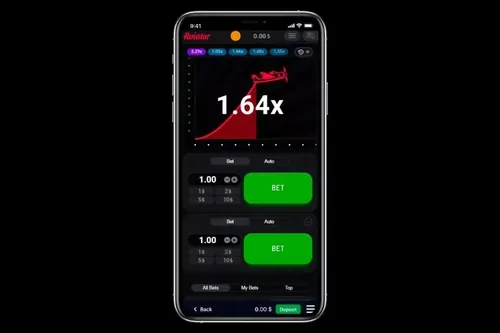
Aviator offers a dual-bet mode that lets players manage two separate wagers simultaneously within one single round. This feature supports strategic cashout timing before the plane flies away and crashes abruptly. The availability of auto cashout further assists players in executing their exit strategy without manual delay.
Bankroll rules that hold up
The theoretical return to player stands at 97.00% which creates a house edge of exactly 3.00%. Operators may configure lower RTP values such as 96% or 94% in circulation affecting long-term expectations. A bankroll must be sized to withstand the variance inherent in these specific mathematical configurations over time.
Progressive staking involves raising stakes after losses which does not change the built-in edge of the game. This approach only shortens the time to ruin compared to flat betting where the stake remains constant every round. Maintaining a fixed budget prevents rapid depletion of funds during inevitable losing streaks in the crash mechanism.
The maximum win cap is set at x1,000,000 which defines the upper limit of potential payouts per round. This figure represents the absolute ceiling regardless of the multiplier speed or the duration of the flight path. Players should calculate their session goals based on this hard limit rather than unrealistic expectations of infinite growth.
Bet sizing against volatility
Spribe also created Dice which features an adjustable volatility setting and a max win of x970 for comparison. Aviator lacks this adjustable parameter but maintains its own inherent risk profile through the unpredictable crash point. Understanding this distinction helps players choose appropriate bet sizes relative to the specific game mechanics involved.
Theoretical RTP figures like 97.00% are averages over hundreds of thousands of rounds and never forecast one session. Short-term results can deviate significantly from this percentage due to the high variance of the crash mechanic. Sizing bets conservatively ensures that temporary dry spells do not force premature termination of the playing session.
Flat betting requires the same stake every round which stabilizes the rate of bankroll consumption over time. This method contrasts with progressive systems that increase exposure after losses and accelerate the likelihood of total ruin. Consistent wagering aligns better with the mathematical reality of the 3.00% house edge inherent in the game.
Comparing Aviator to slots highlights that instant games have different pacing and risk characteristics than spinning reel titles. The absence of paylines means outcomes depend entirely on the timing of the cashout action taken by the player. Adjusting bet size to match this real-time pressure is essential for sustainable engagement with the platform.
Session limits worth setting
The bonus terms include a 300% welcome bonus up to €2,000 plus 100 free spins for new accounts. These promotional funds often come with specific wagering requirements that must be met before any withdrawal is permitted. Setting a deposit limit ensures that bonus chasing does not lead to excessive financial exposure beyond initial plans.
A session loss limit should be defined before starting play to prevent emotional decision-making during losing streaks. Since the game has no reels or spins, the rapid pace of rounds can distort time perception quickly. Establishing a clear endpoint for each sitting helps maintain discipline and protects the overall bankroll from impulsive errors.
The dual-bet mode allows for hedging strategies but still counts toward the total amount wagered in a session. Each active bet contributes to the cumulative turnover required by any associated bonus terms or personal loss caps. Monitoring total exposure across both bets ensures that limits remain effective even when managing multiple simultaneous wagers.
Time-based limits complement financial controls by forcing regular breaks between rounds of the Aviator crash game. Extended play without pauses can lead to fatigue which negatively impacts the precision of cashout timing decisions. Regular intervals help maintain focus on the rising multiplier and reduce the risk of missing critical exit points.
Why chasing losses fails
The house edge of 3.00% remains constant regardless of previous outcomes or the current state of the bankroll. Chasing losses by increasing bet sizes attempts to recover deficits but only accelerates the rate of fund depletion. Mathematical expectation dictates that no betting system can overcome the built-in advantage held by the operator over time.
Spribe's Dice game offers adjustable volatility but cannot alter the fundamental probability distribution governing individual round results. Similarly, Aviator's provably fair algorithm ensures that each crash point is random and independent of prior events. Assuming that a win is due after a series of losses is a cognitive bias known as the gambler's fallacy.
The maximum win of x1,000,000 is a statistical outlier that occurs rarely and cannot be targeted reliably. Relying on such extreme payouts to justify increased risk-taking ignores the high frequency of small or zero returns. Sustainable play requires accepting the randomness of the crash mechanic without attempting to manipulate it through aggressive staking patterns.
The 97.00% RTP indicates that for every hundred units wagered, ninety-seven are returned theoretically over the long run. This figure proves that the remaining three units represent the cost of entertainment rather than an investment opportunity. Viewing losses as unavoidable expenses prevents the dangerous mindset of trying to win back money already spent.
Aviator: key facts
| Parameter | Value |
|---|---|
| Game | Aviator |
| Studio | Spribe |
| Released | 2019 |
| RTP | 97.00% |
| House edge | 3.00% |
| Max win | x1,000,000 |
Common systems and their limits
The theoretical RTP of Aviator is 97.00 percent, which implies a house edge of exactly 3.00 percent over an extended period. This percentage remains constant regardless of the betting strategy employed by the player during any session. Consequently, no system can alter the mathematical expectation or guarantee long-term profitability against the built-in advantage. Players must accept that variance will dictate short-term results rather than strategic skill.
Spribe developed this crash game with a maximum win cap set at x1,000,000 for each individual round played. Such a high multiplier ceiling allows for significant payouts but requires precise timing to cash out before the crash occurs. The dual-bet mode offers players two simultaneous opportunities to engage with the rising multiplier within a single game cycle. This structure increases engagement frequency without changing the underlying probability distribution of the outcome.
Unlike Plane Game from Spribe, which shares the same 97.00 percent RTP and high volatility profile, Aviator features a unique multiplayer live bet feed. This social element displays real-time wagers from other participants, adding transparency to the betting environment without affecting the core mechanics. The provably fair algorithm ensures that each result is generated independently using SHA-256 cryptography. Trust in the fairness relies on this technical certification rather than subjective experience.
Flat betting explained
Flat betting involves wagering the identical stake amount during every single round of the Aviator crash game session. This method maintains a consistent risk level per unit of currency risked, preventing rapid depletion of the bankroll during losing streaks. Since the house edge remains fixed at 3.00 percent, the expected loss per bet is directly proportional to the stake size chosen by the user. Discipline is required to maintain this consistency throughout varying market conditions.
The operator may configure lower RTP settings such as 96.00 percent or even 94.00 percent, which increases the house edge significantly. When playing with a flat stake under these alternative configurations, the rate of bankroll erosion accelerates compared to the standard 97.00 percent version. Players should verify the specific RTP configuration active on their platform before committing funds to ensure they understand the true cost of play. Awareness of this variable is crucial for accurate bankroll management planning.
Auto cashout functionality allows users to set a specific multiplier threshold, automatically securing profits if the plane reaches that height. This feature supports flat betting strategies by removing emotional decision-making from the execution phase of each round. If the auto cashout is not triggered, the entire stake is lost when the crash occurs unexpectedly. Utilizing this tool effectively reduces the psychological burden while maintaining a structured approach to capital preservation across many rounds.
Progressive staking risks
Progressive staking involves raising the stake amount after a loss in an attempt to recover previous losses more quickly. This approach does not change the built-in 3.00 percent house edge inherent in the Aviator game mechanics. Instead, it merely shortens the time to ruin by exposing larger portions of the bankroll to negative variance during downturns. Mathematical models confirm that no betting progression can overcome a negative expectation game in the long run.
Aviator operates as a crash game with no reels, paylines, or spins, meaning outcomes are determined by a continuous multiplier curve. Increasing stakes after losses assumes a regression to mean that does not exist in independent event sequences like this one. A sequence of crashes can deplete a bankroll rapidly when bets are escalated aggressively following each failure. The lack of memory in the SHA-256 proof ensures past results have zero influence on future multipliers.
Certification by iTech Labs and BMM Testlabs confirms the integrity of the random number generation process used in the game. These audits verify that the reported RTP aligns with actual performance over millions of simulated rounds. Progressive staking strategies often lead to hitting table limits or exhausting funds before a winning round occurs. Understanding these regulatory safeguards helps players recognize that luck, not strategy, dictates short-term financial outcomes.
What the maths actually allows
The theoretical return of 97.00 percent means that for every 100 units wagered, approximately 97 units are returned to players over time. This calculation includes all possible outcomes from small multipliers to the massive x1,000,000 cap offered in rare instances. The remaining 3.00 percent represents the statistical advantage retained by the casino operator as revenue. Short-term sessions will deviate significantly from this average due to inherent volatility in the game design.
Provably fair technology combines a server seed with multiple client seeds and a nonce to generate each round's outcome. This cryptographic method allows players to independently verify that the result was predetermined and not manipulated after betting. The use of SHA-256 hashing ensures that neither the provider nor the player can predict the crash point beforehand. Transparency in this process builds trust but does not alter the fundamental mathematical expectations of the game.
Volatility in Aviator is high, indicating that wins may be infrequent but potentially large when they occur. This characteristic contrasts with low volatility games that offer frequent small returns but rarely produce substantial jackpots. Players engaging with this high-variance product must be prepared for extended periods of losses without significant recovery. Proper bankroll allocation is essential to withstand the swings associated with this specific mathematical profile.
Reading variance honestly
Variance describes the fluctuation of results around the expected value, which is critical for managing expectations in crash games. In Aviator, high variance means that standard deviation is large, leading to unpredictable swings in account balance. A player might experience a series of quick losses followed by a single large win that exceeds total wagered amounts. Recognizing this pattern prevents misinterpretation of short-term success as evidence of a flawed system.
The release of Aviator in 2019 introduced a novel mechanic that diverges sharply from traditional slot machine structures. Without spinning reels or static symbols, the visual representation of the rising multiplier creates a distinct psychological experience. This format appeals to players seeking immediate feedback and interactive control through manual or auto cashout options. The simplicity of the interface focuses attention entirely on the timing of the exit strategy.
Bankroll management requires setting aside a specific amount of money designated solely for play, known as the bankroll. This fund must be sufficient to cover the expected number of rounds based on the chosen stake size. Ignoring variance and betting beyond means leads to inevitable financial loss regardless of the perceived insight into patterns. Responsible gambling practices emphasize limiting exposure to the 3.00 percent house edge over time.
Learning the game in demo first
The developer Spribe launched Aviator in 2019 as a crash title without reels or paylines, requiring players to cash out before the multiplier ends. This theoretical structure ensures a return of 97.00% over hundreds of thousands of rounds rather than predicting single session outcomes. Players should test the dual-bet mode and auto cashout features to understand the timing required for successful exits.
Aviator uses SHA-256 combining server seeds with client seeds plus a nonce to guarantee provably fair results for every round. Independent labs iTech Labs and BMM Testlabs certified this algorithmic integrity, ensuring the rising multiplier behaves predictably during gameplay. Understanding these cryptographic methods helps users trust the randomness of the plane flying away without external manipulation.
The maximum win potential reaches x1,000,000 if a player correctly predicts when to exit before the crash occurs. This high cap contrasts with titles like Tower Rush by Galaxsys which limits wins to 100x despite sharing a similar 97.00% RTP. Recognizing this difference allows gamblers to adjust their expectations regarding volatility and potential payout sizes.
Adjusting stakes to your budget
A bankroll represents the money set aside specifically for play, distinct from funds needed for daily living expenses or savings. Using flat betting means placing the same stake every round, which preserves capital longer than progressive staking strategies. Progressive staking raises stakes after losses but does not change the built-in edge and only shortens the time to ruin.
The house edge equals 3.00% derived from the 97.00% theoretical RTP, meaning operators retain three percent of all wagered money over time. Some operators may configure lower returns such as 96% or 94%, directly increasing the mathematical disadvantage for the player. Checking the specific configuration ensures accurate calculation of expected loss rates before committing significant funds to any session.
Bonus terms often include a 300% welcome bonus up to €2,000 plus 100 free spins for new account registrations. These offers provide extra playing capital but usually carry wagering requirements that must be met before withdrawing winnings. Understanding how bonus funds interact with the 3.00% house edge helps manage expectations about real-money conversion rates.
Recognising a bad session
A bad session occurs when the bankroll depletes faster than anticipated due to variance exceeding statistical expectations over a short period. Since Aviator has no reels or spinning symbols, each round is an independent event where the plane flies away randomly. Tracking the number of consecutive crashes helps identify when luck deviates significantly from the long-term 97.00% average.
Operators offering lower RTP configurations like 94% increase the house edge to six percent, accelerating bankroll erosion compared to standard versions. Comparing this against Tower Rush which shares a 97.00% RTP highlights how provider settings impact financial outcomes. Recognizing these differences allows players to avoid platforms with unfavorable mathematical structures during active gameplay sessions.
The multiplayer live bet feed displays real-time wagers, allowing users to observe collective behavior and potential herd mentality effects. Watching others cash out early or late can influence individual decisions, potentially leading to impulsive actions that ignore predetermined limits. Maintaining discipline with auto cashout settings prevents emotional reactions from overriding rational strategic planning during volatile market conditions.
Stopping while ahead
Setting a profit target before starting ensures that gains are secured before the inevitable house edge begins to reclaim funds. With a maximum win cap of x1,000,000, achieving substantial profits requires precise timing and strict adherence to exit strategies. Recording these targets helps maintain objectivity when the adrenaline of the rising multiplier threatens to override logical decision-making processes.
Unlike slots with fixed paylines, Aviator offers dual-bet mode allowing simultaneous wagers with different cashout points to hedge risk. This feature enables players to lock in partial profits on one bet while letting the other ride for higher multipliers. Utilizing this mechanism effectively balances the desire for large wins against the necessity of preserving initial bankroll integrity throughout the session.
Regulatory bodies require operators to provide responsible gaming tools including deposit limits and session time reminders to prevent excessive play. These safeguards help users recognize when a winning streak might turn into a losing one due to natural variance. Engaging with these features proactively supports long-term sustainability by enforcing boundaries that protect against impulsive chasing behaviors.
Responsible play in practice
KYC verification processes ensure that players meet age requirements and identity standards before accessing real-money gambling features on platforms. Spribe’s integration of provably fair technology via SHA-256 enhances transparency, allowing users to verify the fairness of each individual round independently. This technological assurance complements regulatory oversight by providing empirical proof of random number generation integrity for every transaction.
Certification by iTech Labs and BMM Testlabs confirms that Aviator meets international standards for game fairness and operational reliability. These audits examine the source code and algorithms to ensure no hidden mechanisms manipulate outcomes against player interests. Such third-party validation provides confidence that the 97.00% RTP is accurately reflected in actual gameplay mechanics over time.
Bankroll management remains the most critical aspect of responsible play, requiring strict separation between gambling funds and personal finances. Avoiding progressive staking systems prevents the illusion of control over outcomes that are fundamentally determined by random chance. Educating oneself on the mathematical realities of the 3.00% house edge fosters realistic expectations and reduces the risk of financial harm.
DemoRTP & VolatilityHow to PlayAuto CashoutStrategyBonusesMobileDownload & AppMax WinSimilar GamesReviewFAQSitemap
Aviator 2026